Singapore plumber to Australia: can your records prove the work?
Visa guide · 2026-10-16 · 9 min read
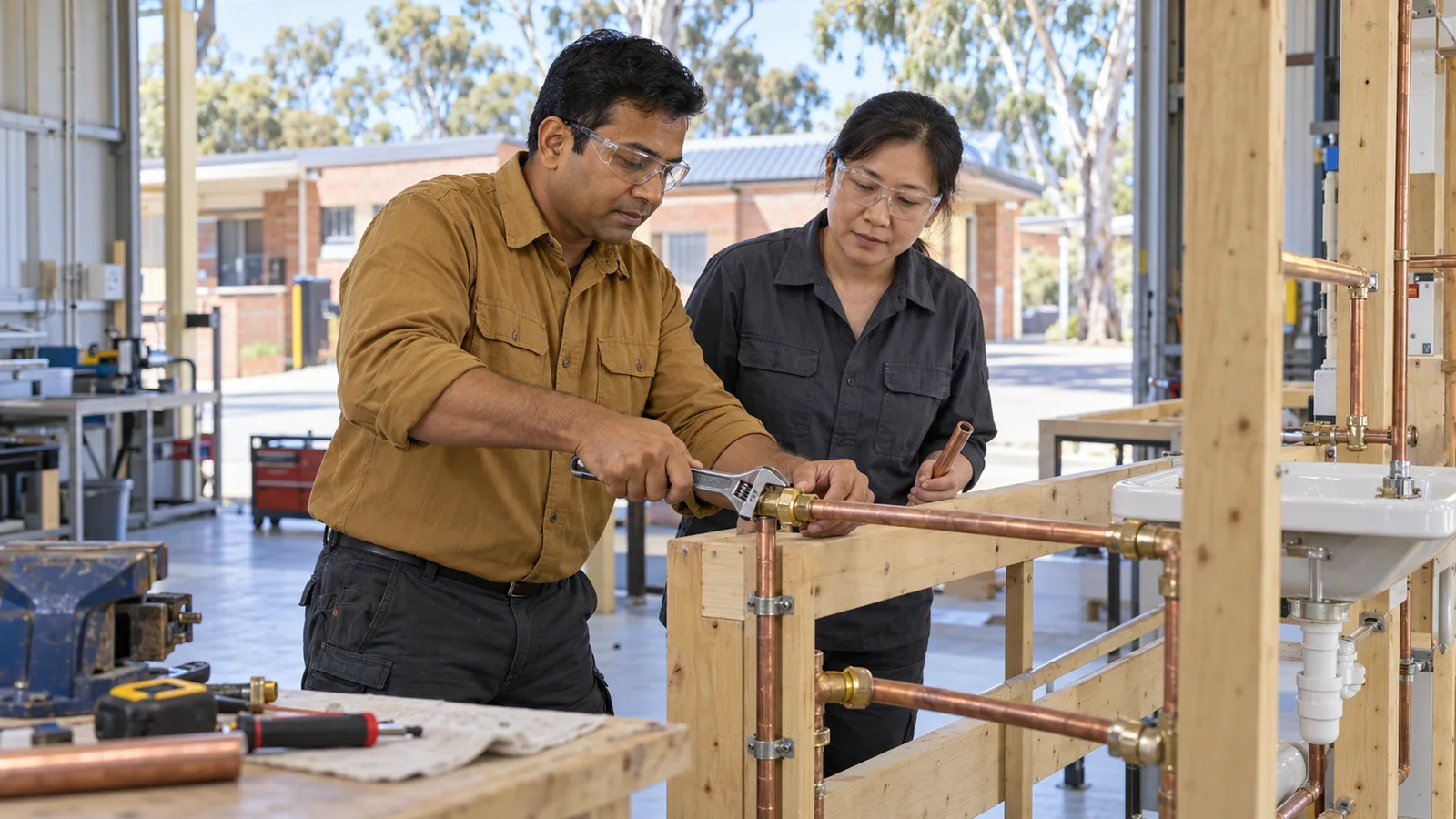
A Singapore plumber to Australia move starts with a credible record of the work you have actually done. Keep your Singapore awards, training and employment evidence accurate, then check the assessment programme and licensing requirements for your intended destination. OSAP applies to permanent migration as a Plumber (General), while visa permission and state plumbing authority require separate attention. Neither an ITE or WSQ credential nor recognition of prior learning automatically authorises Australian plumbing work.
Start with the work behind your job title
Before looking for an Australian equivalent to your title, write down your actual responsibilities. If your Singapore role combined building maintenance with plumbing, separate the plumbing duties from general repairs. Describe the systems you worked on, your level of responsibility and whether you completed tasks independently or assisted another worker.
A useful record connects each claimed skill to employment dates and someone who can verify it. Avoid expanding a maintenance role into a specialist occupation simply because the latter appears in a migration discussion. An employer needs to understand your experience; an assessor needs evidence relevant to the occupation being assessed.
Use the Australia employment overview to frame your search around the destination. Our article on reading workforce figures before planning an Australian career also helps distinguish broad labour-market context from the requirements of a particular application.
Describe Singapore training without creating an equivalence
ITE distinguishes National ITE Certificate (Nitec), Higher National ITE Certificate (Higher Nitec), Technical Diploma and Work-Study Diploma. Use the award printed on your certificate, together with its issuing institution and supporting transcripts. If you also hold a polytechnic diploma, keep its actual title rather than renaming it after an Australian course.
WSQ is a national workforce skills system, but a WSQ credential is not an Australian occupational licence. A WSQ Statement of Attainment certifies a single module. Presenting one as completion of an entire qualification makes the record less reliable, even where the module is relevant to your plumbing work.
The WSQ scope was revised from 1 May 2026. For your application, the practical point is to retain the award and issuer shown on each original document, including older records. Do not update an earlier certificate’s issuing body yourself or assume that a system change alters the recognition of your particular award overseas.
If considering recognition of prior learning through RPLDirect, ask what qualification would be assessed and what evidence it requires. Keep that enquiry separate from migration assessment and state licensing; RPL does not itself grant plumbing authority.
Build a record that someone else can check
Organise a working evidence file before paying for an assessment. The checklist below is preparation advice, not a substitute for the chosen assessor’s document rules. Ask which records, certification and translations are required before commissioning them.
| Evidence group | What to organise in Singapore | What it helps explain |
|---|---|---|
| Education and training | Exact certificates, transcripts and available module records | The training completed, without claiming overseas equivalence |
| Employment history | Contracts, dated testimonials and available pay records | Where and when the claimed work took place |
| Practical responsibilities | A factual account of plumbing tasks and supervision | Your contribution rather than the whole team’s output |
| Referee details | Current contact details and each referee’s relationship to your work | Who can independently confirm particular periods and duties |
Cross-check dates between the CV, testimonials and supporting records. If a document uses a different title from your everyday description, explain the difference instead of silently changing it. Ask former employers to correct errors in their own records, and keep the original alongside any replacement.
Do not assume everyone working in Singapore has the same supporting documents. Use records that actually exist for your employment, and ask the assessor how to address a gap. A photograph of completed pipework may help explain a task, but ask whether it is accepted and what accompanying evidence establishes your involvement.
Choose the assessment using your own circumstances
Trades Recognition Australia explains that its assessment programmes depend on occupation, country of passport, where you studied and the visa sought. Record each separately. Living in Singapore does not establish Singapore citizenship, and a Singapore qualification does not tell the assessor which passport you hold.
For permanent migration as a Plumber (General), the Offshore Skills Assessment Program is compulsory. TRA works with registered training organisations on this assessment. Confirm the relevant process using your occupation and circumstances before submitting evidence or paying an organisation.
TRA does not award Australian qualifications, occupational registrations or occupational licences. Treat an assessment outcome as an answer to the assessment question, then identify the remaining licensing requirements. Keep a separate status record for the assessment, visa application and state licensing enquiry.
For the Skills in Demand visa, subclass 482, employer sponsorship and nomination concern an eligible position. Some primary applicants need a mandatory skills assessment, which must be commenced before lodging the visa application. Check whether that requirement applies to your actual case; do not borrow another passport holder’s assessment arrangements.
The Skills in Demand visa guide provides broader context. Our discussion of employer concerns about migration predictability is useful background when discussing readiness, but an employer’s preferred start date cannot settle an assessment requirement.
Identify the state before agreeing to the duties
New South Wales does not recognise overseas qualifications for contractor licences or certificates. Its overseas-trained applicant guidance describes an Offshore Technical Skills Record through OSAP, alongside Australian context gap training and supervised employment for overseas-trained plumbers.
For a role in NSW, ask the employer how the proposed work relates to those requirements. Establish who would supervise you and how any required training would fit the role. Do not describe yourself as holding an unrestricted local licence while these questions remain unresolved.
Queensland has its own rules. The QBCC guidance for overseas applicants requires the usual eligibility conditions and a visa or ImmiCard entitling the applicant to work in Australia. Overseas plumber or drainer applicants use the occupational licence application form.
That requirement does not mean a visa grants a Queensland licence, or that a job offer satisfies every licensing condition. Ask QBCC about the licence relevant to the duties. For another state, consult that regulator rather than treating either of these examples as a national process.
Turn the paperwork into a practical application sequence
- Define the intended work. Compare duties in available overseas vacancies with your genuine plumbing experience. Note the destination state and any stated licence requirement.
- Inventory your Singapore records. List the exact awards, employment periods and available supporting evidence. Identify gaps before requesting documents from former employers.
- Confirm the assessment route. Give the relevant body your occupation, passport country, study location and intended visa. Obtain its current evidence instructions.
- Clarify local licensing. Ask the state regulator what recognition, training, supervision and authorisation your circumstances require.
- Coordinate the application. Align your CV and evidence with the employer discussion, while keeping visa and licensing decisions with the responsible authorities.
Keep a short list of unresolved questions and the body responsible for answering each. A course provider can explain its training, while a regulator determines licensing requirements. Our article on preparing while Australian migration reforms are debated explains why proposals should remain separate from operative application rules.
Common mistakes when presenting Singapore plumbing experience
- Using “qualified plumber” without context. State the actual award, jurisdiction and work performed so readers can distinguish training from licensing.
- Submitting a generic testimonial. Ask for duties and dates that a referee can confirm, rather than relying on praise without work details.
- Claiming the team’s entire scope. Separate your own tasks from those you observed or supported.
- Buying an assessment from a country label. Programme selection depends on several personal and occupational factors, not your Singapore address alone.
- Treating recognition as permission to practise. An assessment or RPL outcome does not remove state licensing requirements.
- Assuming approval dates. Mark unresolved stages honestly when discussing availability; an employer conversation is not confirmation from an assessor or regulator.
Frequently asked questions
Can I present an ITE award as an Australian plumbing qualification?
Keep the exact ITE award title and issuing body on your application. It records what you completed in Singapore, but does not automatically become an Australian qualification or plumbing licence. Supply the supporting training records and let the relevant assessor or regulator determine their relevance.
Does a WSQ Statement of Attainment prove completion of a full qualification?
A WSQ Statement of Attainment certifies a single module. Describe that module accurately and distinguish it from any full award you hold. Retain the issuer printed on the original document, even if newer documents use a different organisation name.
Is OSAP the right assessment for every plumber leaving Singapore?
OSAP is compulsory for permanent migration in the occupation Plumber (General). A different visa situation needs its own assessment check: TRA programme selection considers occupation, passport country, study location and intended visa. A Singapore address or certificate alone cannot establish the correct programme.
What should I ask a Singapore employer to put in a testimonial?
Ask for accurate employment dates, duties, the equipment or systems you worked on, and a referee who can confirm the account. Explain which tasks you performed personally and which you assisted with. Keep supporting employment and pay records, then check the selected assessor’s requirements for acceptable evidence and certification.
Can an Australian job offer replace the plumbing licence process?
No. Employer selection, immigration permission and occupational licensing serve different purposes. Ask which state licence or supervised-work arrangement the role requires, and confirm the regulator’s requirements before agreeing to duties that assume you already hold Australian plumbing authority.
Last checked: 2026-10-31 against the official pages linked above.
Key takeaways
- Present Singapore qualifications under their exact names, supported by records of real plumbing work.
- Check assessment selection using occupation, passport, study history and intended visa.
- Keep OSAP, immigration permission and state plumbing licensing as separate decisions.
- Confirm the destination regulator’s requirements before agreeing to duties or training.
Every case is different — book a consultation for individual Australian visa guidance from registered migration agents (MARA). The adviser assesses the visa circumstances; the relevant regulator determines plumbing licensing requirements.
#singapore plumber to australia #plumbing evidence #ite qualifications #wsq #osap #australian plumbing licence
 Skills assessment from Singapore: can your records show the work Australia needs?
 Singapore electrician to Australia: can your records support the work you want?
 Singapore electrician planning New Zealand? Prepare your EWRB registration evidence