Planning horticulture work from Singapore? Check the training pathway behind the offer
News · 2026-09-01 · 4 min read
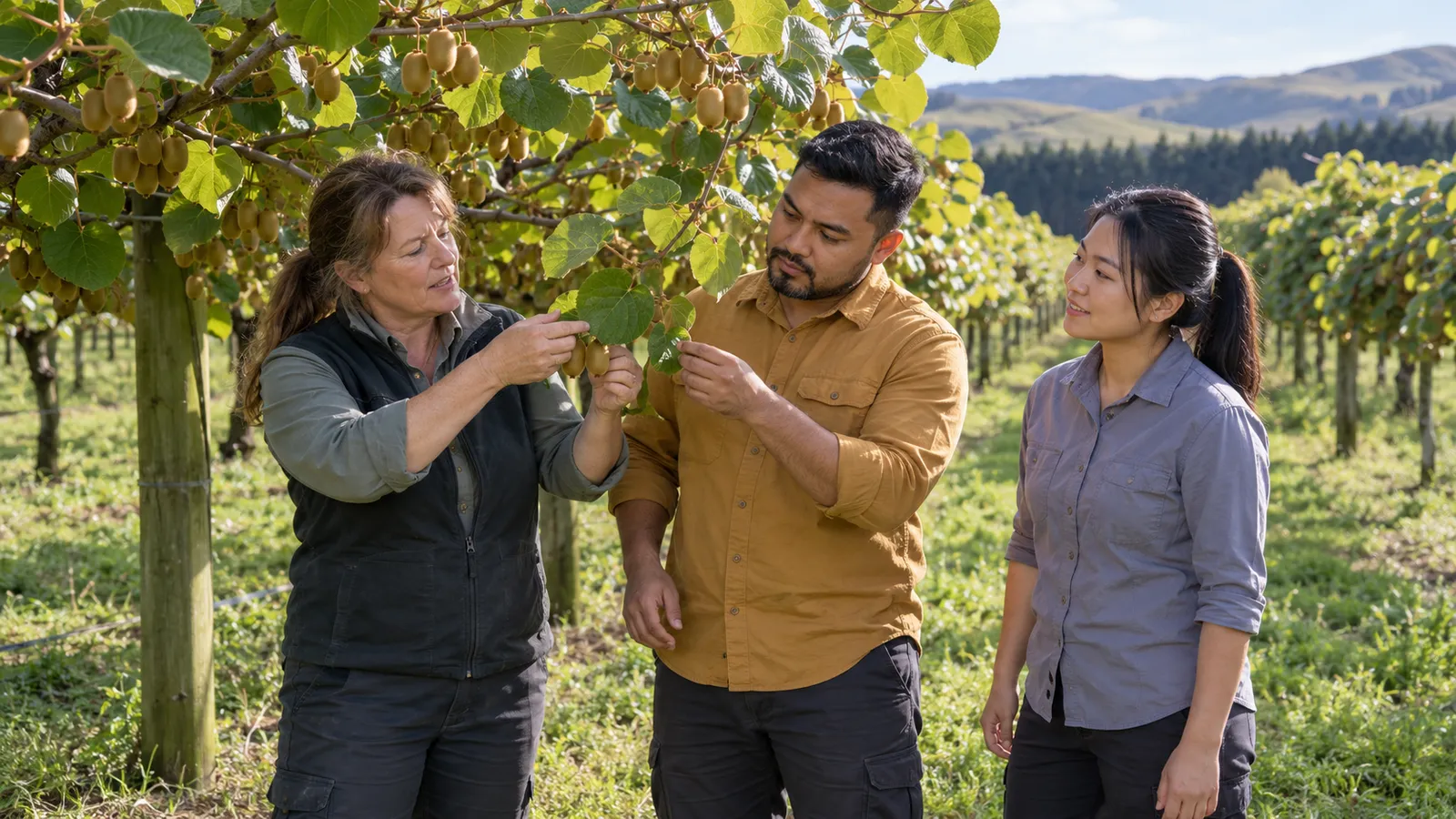
Before accepting horticulture work in New Zealand, ask how any promised training would continue if its provider changed. For applicants in Singapore, the archived restructuring plan matters because a workplace role, access to a qualification and permission to undertake training are separate matters. A proposed improvement in migrant training access was not confirmation that every work-visa holder could enrol.
Why the training question belongs in your job discussion
The Food and Fibre Workforce Capability Strategy proposed restoring training eligibility for workers holding work visas. The aim was to make recognised workplace learning more accessible, helping employees develop beyond general labour duties and helping employers retain experienced staff. That potential included progression towards more skilled and better-paid work, rather than a pay increase promised to every participant.
The backdrop was a roughly two-thirds reduction in fruit and vegetable work-based training enrolments between 2021 and 2024. An ageing domestic workforce and persistent skills shortages added pressure. Employers in orchards, packhouses and nurseries could need staff while still facing uncertainty about how those staff would gain formal qualifications.
Read the transition as an archived timetable
The transition account set out the following sequence. These dates describe that plan; they do not independently confirm a provider’s present intake arrangements.
- From 1 January 2026, horticulture work-based training was scheduled to leave Te Pūkenga for the temporary Food and Fibre Industry Skills Board.
- Primary ITO was to continue delivery through the end of 2027, supporting around 1,500 existing enrolments nationwide.
- By June 2027, the current arrangement was to stop accepting new enrolments.
- By 2028, regional polytechnics and private providers were expected to deliver work-based learning, leaving the Skills Board responsible for standards.
The concern raised by Horticulture New Zealand and Primary ITO was continuity: a provider might decline to run a specialised qualification with low enrolment numbers. The original discussion framed the next 18 months as an important period for government and industry coordination. That was its planning horizon, not a fresh countdown for readers opening this article later.
Ask for a pathway you can describe in writing
Ask a prospective employer which qualification is offered, who delivers it, how workplace assessment is arranged and what happens if delivery transfers. Confirm whether the training is available to someone with your actual visa status. Ask who keeps completed assessments and whether a receiving provider will recognise the work already done.
Primary ITO’s Horticulture Cadetship Programme offered a practical example of support: apprentices learned with peer groups, attended shared study sessions and had a dedicated adviser handling training compliance for the employer. It was piloted in Pukekohe and was expanding into the Bay of Plenty in the account. That example should prompt questions about support, rather than an assumption that every job includes the programme.
Bring clear records of any relevant Singapore learning. Use the qualification title and issuing body printed on an ITE, polytechnic or WSQ document; explain the practical tasks covered. A Singapore award does not automatically become a New Zealand qualification. Use Build AI CV to organise your relevant work and training, while retaining certificates and employment evidence separately.
Common mistakes when comparing horticulture offers
Avoid treating proposed training eligibility as confirmed access, or treating completion of a course as a residence entitlement. Check the route applicable to the actual duties: Immigration New Zealand’s employer work-visa guidance excludes crop planting, maintenance, harvesting and packing in horticulture or viticulture from that particular route. A sector-wide sponsorship description cannot settle an individual job’s visa position.
Compare the written duties in available overseas vacancies with your experience. The archive articles on New Zealand trade career planning and ACT’s proposed residence model provide related context, while remaining distinct from the terms of a horticulture training offer.
Frequently asked questions
Was training access restored by the strategy itself?
The restoration was a proposal within the strategy. The account did not establish universal enrolment rights for workers on visas.
Was all training due to stop in June 2027?
No. That was the stated point for ending new enrolments under the existing arrangement. Delivery for existing learners was described as continuing through the end of 2027.
What if my qualification has few learners?
Ask the provider about completion and transfer arrangements. The concern was that specialised provision could become commercially unattractive; the account did not say every such course would close.
Does a Singapore qualification replace the training requirement?
Do not assume equivalence. Give the receiving provider your award, transcript and relevant work evidence, and ask what it recognises for the particular programme.
Key takeaways
A credible career plan needs clarity about the job, training access and completion arrangements. Preserve evidence of learning already completed, confirm the actual visa route and obtain specific answers before relying on a training promise when moving from Singapore.
#horticulture #new zealand #training #singapore #qualifications
 Singapore engineers eyeing New Zealand: check the training behind the vacancy
 AEWV job offer checks from Singapore: is your evidence ready before you resign?
 Can your Singapore trade experience support a move to regional New Zealand?