Australia trade interview questions: make Singapore experience clear
Tips · 2026-10-30 · 9 min read
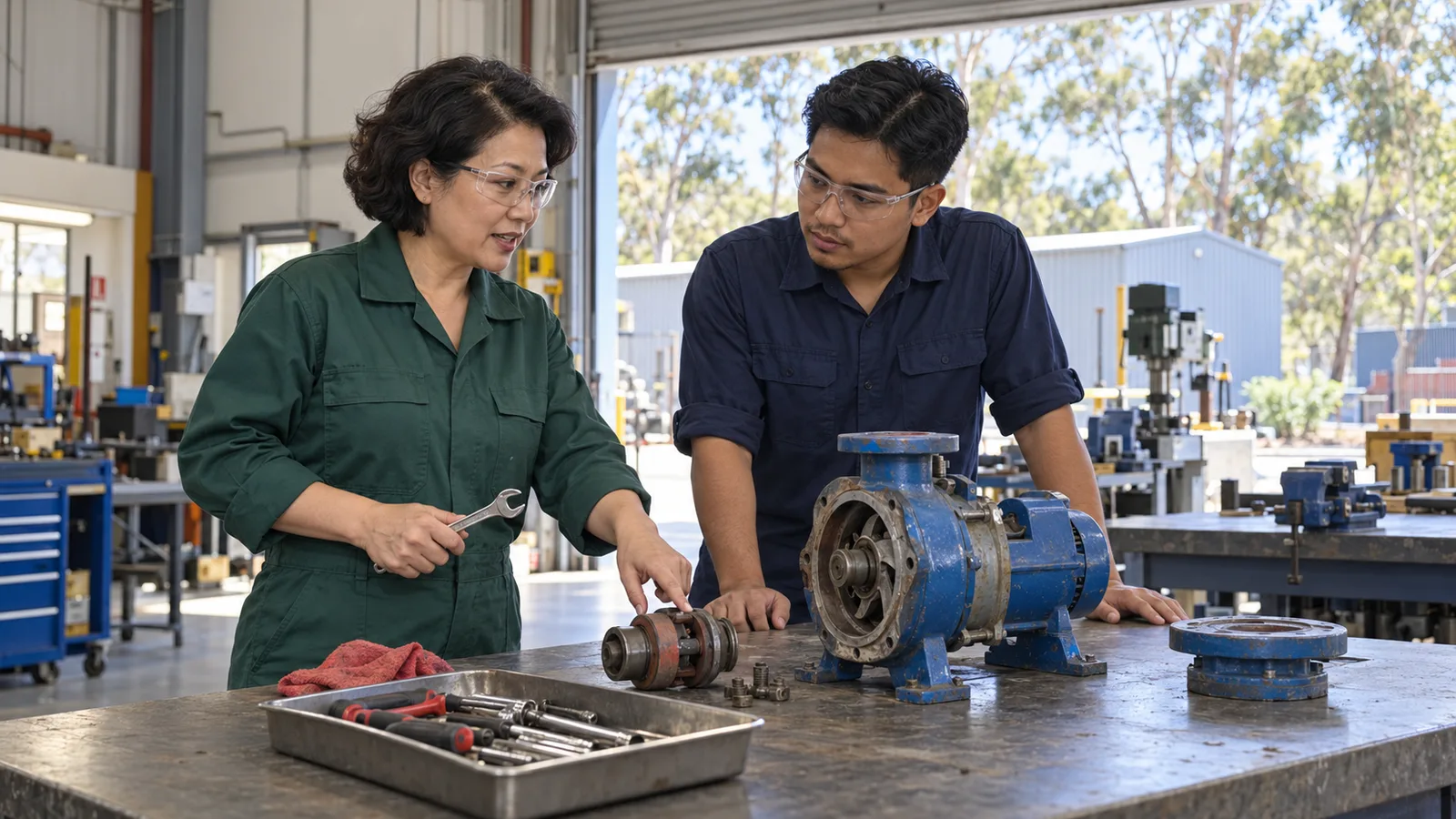
For Singapore applicants, Australia trade interview questions are best prepared through evidence of work you have actually done. Explain your duties, tools, decisions and employment dates in clear English, using the exact names on your Singapore qualifications. Keep the employer's hiring decision separate from skills assessment, occupational licensing and visa approval; a convincing interview does not replace any of them.
Build the conversation around the advertised work
Begin with a vacancy, rather than memorising a general interview script. From the duties, identify tasks you can discuss confidently, tasks you have only assisted with and tasks you have not performed. Use the overseas vacancies listed on JobsAbroad Singapore to practise that comparison without assuming every role has the same requirements.
A maintenance title can hide very different responsibilities. Describe whether you inspected equipment, diagnosed faults, replaced components, tested completed work or coordinated contractors. Separate your own actions from the team's output, and distinguish practical work from supervision. Our article on demonstrating trade capability when considering Australia from Singapore provides useful context for this approach.
Prepare a brief introduction covering your current work, relevant training and the duties you want to discuss. Avoid claiming familiarity with Australian equipment, standards or site procedures you have never used. Naming a gap and asking how the employer manages it is more informative than agreeing to everything.
Make Singapore training understandable without renaming it
ITE distinguishes Nitec, Higher Nitec, Technical Diploma and Work-Study Diploma awards. Give the full award as printed on your certificate, followed by its field and relevant practical training. Keep transcripts available so you can explain what was covered. Do not relabel a Singapore award as an Australian qualification to make it sound familiar.
WSQ is a system for developing, assessing and certifying workforce skills. A WSQ Statement of Attainment certifies a single module; it should not be described as a whole qualification. Preserve the issuing body and wording on your actual document, including older awards, rather than changing them to match newer terminology.
If you hold a polytechnic diploma, explain the relevant coursework and workplace application in the same way. A useful answer connects an award to a task you can perform and the evidence supporting it. None of these Singapore credentials, by itself, establishes an Australian occupational licence.
| Record to prepare | What to explain during the interview | Boundary to preserve |
|---|---|---|
| ITE award and transcript | Exact award, field and practical learning relevant to the vacancy | Do not invent an Australian qualification equivalence |
| WSQ Statement of Attainment | The completed module and how you used the skill | A module award is not a full qualification or trade licence |
| Employment testimonial and work history | Dates, hours, responsibilities and who can confirm them | A positive testimonial does not establish licensing approval |
| Assessment or licensing correspondence | The actual stage reached and outstanding requirements | An application submitted is not an approval granted |
Choose work examples that reveal your judgement
Prepare examples from your own employment rather than adopting a polished story from someone else's CV. For each, explain the task, the difficulty, your decision and how you checked the result. Use technical terms when necessary, but spell out unfamiliar workplace abbreviations.
For a drawing-related task, describe how you checked the relevant information before starting and handled a discrepancy. For fault-finding, explain what you observed, how you narrowed the cause and when you sought assistance. A chef can discuss preparation, coordination during service and checking finished work. Include only tasks you personally carried out.
For safety, choose a real occasion when you recognised a problem, paused work, sought clarification or escalated a concern. Explain who you informed and what allowed work to proceed. This is an account of your judgement, not a technical tutorial or a claim that Singapore procedures automatically meet Australian requirements.
Ask how responsibilities are divided in the destination workplace. Our discussion of how Australian building-site work is organised can help you develop questions about supervision, coordination and the actual role.
Describe readiness using documents, not a promised start date
Trades Recognition Australia selects programmes according to occupation, passport country, place of study and the visa sought. Living in Singapore or holding an ITE award does not select the programme. Use TRA's programme guidance for your own circumstances; another applicant's assessment route may differ.
TRA does not award Australian qualifications, occupational registration or licences. Explain assessment progress and licensing progress separately, naming the destination state and relevant regulator where you have confirmed them. If requirements remain unclear, say what you still need to establish rather than promising unrestricted work on arrival.
For the Skills in Demand visa, subclass 482, relevant experience must generally total at least 1 year within the last 5 years; part-time or casual work must amount to at least 12 months full-time. Some primary applicants need a mandatory skills assessment commenced before lodging. Check the Home Affairs Core Skills requirements and the site's Skills in Demand guide separately from the employer's selection criteria.
Keep employment dates and working hours consistent across your CV, testimonials and answers. Explain periods spent studying, supervising or doing unrelated duties without counting everything as hands-on trade experience. Do not offer a firm start date while essential approvals remain unresolved.
Interview fluency also differs from formal English evidence. The 482 rules include an exemption for at least 5 years of full-time secondary-or-higher study where most classes were taught in English, supported by documents. A Singapore education may be relevant, but residence or conversational fluency is not enough to establish this exemption. Check the route's English evidence requirements before saying a test is unnecessary.
Use the interview to examine the offer
Ask which award or agreement covers the job, how the role is classified and what the roster involves. Clarify ordinary duties, supervision, work locations and how any licensing steps fit the proposed work. Australian visa holders and migrant workers have the same workplace protections as other employees, including pay, leave and protection from discrimination.
If an Australian practical trial is proposed, request its tasks, duration, supervision and payment arrangements in writing. Under Fair Work's unpaid trial guidance, a trial may be unlawful if it exceeds what is reasonably needed to demonstrate skills, becomes more than a skills demonstration or is not directly supervised. An employer calling it an assessment does not settle whether it should be paid.
Ask who is responsible for sponsorship and nomination costs. The sponsoring employer must meet those costs and cannot transfer them to the worker or family. Treat a request for recruitment fees or training-material payments before starting as a warning sign, especially with unexpected messaging-app contact or a rushed hiring process without an interview. Verify the organisation before sending identity documents.
Keep wider demand headlines separate from the specific offer. Our article on preparing in Singapore in light of Australia's construction forecast is background reading; the interview still needs to establish what this employer is offering.
A practical rehearsal before the call
- Mark the advertised duties you can support with evidence, and note gaps to discuss honestly.
- Put exact qualification names, employment dates and hours beside the corresponding entries in your CV.
- Select a completed task, a problem-solving example and a safety decision from your actual work.
- Check your current assessment, licensing and visa position so you can distinguish completed steps from pending ones.
- Practise explaining the examples aloud with InterviewTraining.ai mock interview practice, then remove claims you cannot substantiate.
- Test your audio and connection, confirm the interview time and time zone, and keep your questions within reach.
Use prompts rather than reading complete answers from the screen. After the call, record what was agreed and request clarification of missing terms. Rehearsal helps you communicate; it does not promise employment or visa approval.
Common mistakes when presenting Singapore trade experience
- Expanding a module into a qualification: name the WSQ award precisely and describe its scope.
- Borrowing someone else's assessment route: check your occupation, passport, study history and intended visa together.
- Hiding practical gaps behind seniority: explain your own tools, tasks and decisions, even if your title includes supervisor or manager.
- Claiming a licence before approval: state the documented stage rather than treating an assessment application as permission to practise.
- Agreeing before understanding the terms: clarify the roster, trial arrangements and employer-paid sponsorship costs before committing.
Frequently asked questions
How can I explain a Higher Nitec award to an Australian interviewer?
Use the exact award name, describe its field and identify practical training relevant to the advertised duties. Keep the transcript available and connect the learning to work you have actually performed. Do not claim that the award automatically equals an Australian qualification or licence.
Can I use a WSQ Statement of Attainment as proof of a full trade qualification?
A WSQ Statement of Attainment certifies a single module, so describe that module accurately. Explain how you applied the skill and preserve the issuer printed on the document. Assessment and licensing requirements must still be checked separately.
What should I say if I have not completed an Australian skills assessment?
State your actual progress and what remains to be confirmed. TRA programme selection depends on occupation, passport country, place of study and the intended visa. Avoid promising a completion date or presenting an assessment as an occupational licence.
Does speaking English at work in Singapore remove the need for visa English evidence?
Workplace fluency alone does not establish a visa exemption. For subclass 482, relevant English-medium study can support an exemption if the specified conditions and documentary requirements are met. Check the actual route before telling an employer that no test is needed.
How should I respond to a request for an unpaid practical trial in Australia?
Ask for the tasks, duration, supervisor and payment arrangements before agreeing. An unpaid trial may be unlawful if it goes beyond the necessary skills demonstration or lacks direct supervision. Check the Fair Work guidance against the proposed arrangement rather than assuming every trial is unpaid.
Key takeaways
- Explain genuine work examples and keep dates, hours and duties consistent.
- Preserve ITE and WSQ award names without inventing overseas equivalence.
- Separate hiring, skills assessment, occupational licensing and visa decisions.
- Ask about the award, roster, trial conditions and sponsorship costs.
Last checked: 2026-10-31 against the official pages linked above.
Every case is different. For an individual assessment of your Australian visa circumstances, book a consultation with our partner registered migration agents (MARA).
#australia #trade interview questions #singapore #ite #wsq #skills assessment
 Singapore electrician to Australia: can your records support the work you want?
 Singapore nurse registration in Australia: does your practice history fit?
 Welding experience in Singapore? Look beyond Australia’s shortage headline